
Navigation
Install the app
How to install the app on iOS
Follow along with the video below to see how to install our site as a web app on your home screen.
Note: This feature may not be available in some browsers.
More options
Style variation
You are using an out of date browser. It may not display this or other websites correctly.
You should upgrade or use an alternative browser.
You should upgrade or use an alternative browser.
Brushless Motors Failing
- Thread starter danl
- Start date
This site may earn a commission from merchant affiliate
links, including eBay, Amazon, and others.
links, including eBay, Amazon, and others.


Sandracer_NL
Well-known member
- Messages
- 377
- Reaction score
- 600
- Points
- 293
- Location
- The Netherlands
- Corally RC's
- Kagama
- Muraco
- Radix
- Spark
625 SKF 
Even the rubber sealed bearimgs are rated for 48k rpm.
https://www.qualitybearingsonline.com/625-2rs1-skf-miniature-deep-groove-5x16x5mm/
Even the rubber sealed bearimgs are rated for 48k rpm.
https://www.qualitybearingsonline.com/625-2rs1-skf-miniature-deep-groove-5x16x5mm/

Horatio
Well-known member
- Messages
- 2,664
- Reaction score
- 3,535
- Points
- 458
I think they're the same bearings?I’m familiar with NSK and NTN, haven’t heard of NYK.

Edit: NSK are the bearings of choice. NYK recondition main bearings in large Diesel engines and is not what I meant.


Last edited:
- Thread starter
- #66
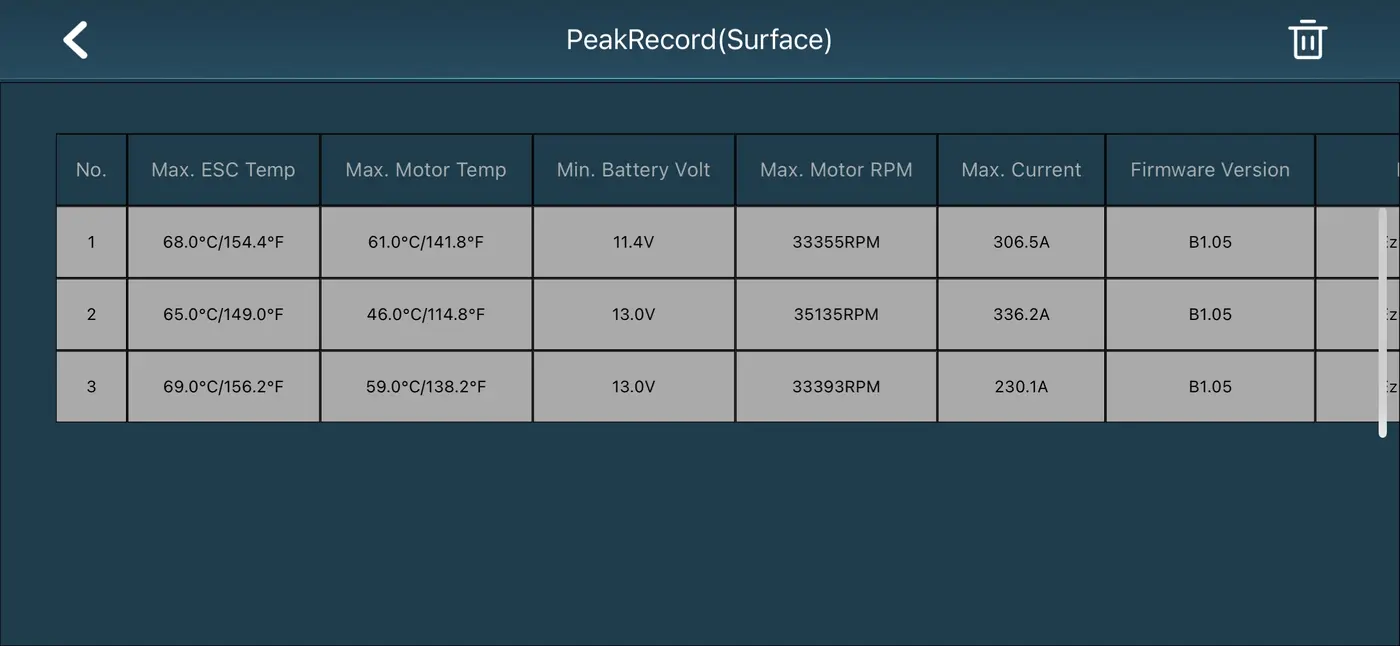
These are peak temps. It records the peaks for every power cycle.
No. 1 - Ran it from full charge to cut off taking breaks in between to check temps.
No 2 - Started running it then had to swap out a bent dogbone.
No 3 - Ran the rest of the pack down.
All runs on 4S. Its about 20 degrees cooler now as well which is helping.
No. 1 - Ran it from full charge to cut off taking breaks in between to check temps.
No 2 - Started running it then had to swap out a bent dogbone.
No 3 - Ran the rest of the pack down.
All runs on 4S. Its about 20 degrees cooler now as well which is helping.

Atomic Skull
Well-known member
- Messages
- 788
- Reaction score
- 752
- Points
- 248
Look at the prices though a $500 USD motor probably wouldn't sell well in the surface R/C market.Those are Heli motors and not applicable for car use.
That being said, if such motors have wires and magnets that can withstand such crazy high temps, this is exactly what bashers and racers alike need in our motors - right now already!!
Horatio
Well-known member
- Messages
- 2,664
- Reaction score
- 3,535
- Points
- 458
They're a bit steep that's for sure!Look at the prices though a $500 USD motor probably wouldn't sell well in the surface R/C market.
How can the magnets cope with that sort of heat I wonder? - Thread starter
- #70
https://en.wikipedia.org/wiki/Neodymium_magnet
Page down a bit to the table labeled "Magnetic properties of various permanent magnets" and also the section labeled "Temperature Sensitivity".
If I am reading this correctly the magnets start losing their strength at approximately 100C and continues to tail off till the Tc (curie temperature) is reached. Further the magnets can fall into different operating grades with 80C being the default and higher grades able to operate at 230C.
What I am not clear on is can you go above the recommended operating range so long as you stay below a certain point (Tc?) without hurting the magnets? Or do the magnets degrade if you operate above the operating range and that degradation increases the closer you get to Tc?
Page down a bit to the table labeled "Magnetic properties of various permanent magnets" and also the section labeled "Temperature Sensitivity".
If I am reading this correctly the magnets start losing their strength at approximately 100C and continues to tail off till the Tc (curie temperature) is reached. Further the magnets can fall into different operating grades with 80C being the default and higher grades able to operate at 230C.
What I am not clear on is can you go above the recommended operating range so long as you stay below a certain point (Tc?) without hurting the magnets? Or do the magnets degrade if you operate above the operating range and that degradation increases the closer you get to Tc?

Nelson.81
Well-known member
- Messages
- 1,389
- Reaction score
- 1,968
- Points
- 333
https://en.wikipedia.org/wiki/Neodymium_magnet
Page down a bit to the table labeled "Magnetic properties of various permanent magnets" and also the section labeled "Temperature Sensitivity".
If I am reading this correctly the magnets start losing their strength at approximately 100C and continues to tail off till the Tc (curie temperature) is reached. Further the magnets can fall into different operating grades with 80C being the default and higher grades able to operate at 230C.
What I am not clear on is can you go above the recommended operating range so long as you stay below a certain point (Tc?) without hurting the magnets? Or do the magnets degrade if you operate above the operating range and that degradation increases the closer you get to Tc?
https://neomagnets.net/how-does-temperature-affect-magnets/
- Thread starter
- #72
According to that even the most economical magnets can withstand 180C before degradingf starts? Neodymium Iron Boron which I assume a RC motor is made of is 230C.
Nelson.81
Well-known member
- Messages
- 1,389
- Reaction score
- 1,968
- Points
- 333
When you measure your temps your measuring the outside of the can the internal temps at the magnet will be even higherAccording to that even the most economical magnets can withstand 180C before degradingf starts? Neodymium Iron Boron which I assume a RC motor is made of is 230C.

SirCrashALot
Well-known member
- Messages
- 342
- Reaction score
- 399
- Points
- 218
I use SKF bearings for my motors. Their metal shielded bearings are rated for 80k rpm For all the other bearings in the car, i use whatever i can find. I have to replace them often anyway.Good tip on the o ring on motor shaft. I was told to be careful when blowing air to clean the car, don’t blow towards the motor shaft. So this can’t hurt.
I’ve been trying to find good bearings. Found some Japanese ezo bearings from Grainger but they are not reliable. I can’t find anything rated above 50k rpm.
Horatio
Well-known member
- Messages
- 2,664
- Reaction score
- 3,535
- Points
- 458
I don't think it's a flat line before performance degradation begins, but there is a point where the loss of flux is permanent.According to that even the most economical magnets can withstand 180C before degradingf starts? Neodymium Iron Boron which I assume a RC motor is made of is 230C.
Neodymium magnets are actually more prone to flux loss due to heat than the ferrite magnets used in brushed motors 20 odd years ago.
Even though ferrite magnets are more heat resilient than neodymium ones, I can tell you from first hand experience - racing at National level in 27t stock and 19t super-stock motor classes - that heat was the number 1 enemy to motor performance. Don't let anyone tell you that brushed motors didn't get hot!
It was very normal to use a finned heatsink - but no one used fans when using Nimh cells and brushed motors. The cooler the motor, the quicker and punchier the motors were. Comms had to be lathed every meeting. Comm drops were used to lubricate them. Armatures needed to be carefully shimmed to hold them in the optimal part of the magnet field. Brushes were cut. Magnets were 'Zapped'. A constant labour of love. My motor lathe was £200 back at the end of 90's. That's £382 in today's money - $513!
Typically, racing indoors meant very twisty, technical circuits that heated up motors very quickly. For me, I found an advantage with Reedy MVP motors that had stronger magnets. At that time, many top racers felt the magnets were too strong and caused the motor to get hot - and go soft. So they tended to run Trinity or Epic based motors.
I got around this. I kept my Reedy motors in the freezer at each round and rotated 2 or 3 motors at each meeting. My motors were finishing noticeably cooler at the end of a 5 minute round - because mine started the on the tone at -22°C!!
A 40°C temperature advantage is significant over a 5 minute race. It also gave me great punch off the line!The point I'm making is that brushless motors work better the cooler they are. They also have the potential to generate much more heat, especially with modern power systems.
My TLR 22X-4 Elite has 2 of these fitted - one directly over the motor, the other at the rear to exhaust warm air.
If temperatures didn't matter up to about 212°F, why would modern 1/10th buggies bother with any fans, let alone 2?
Look at this motor:
It's literally like a sieve! More perforations than a Tetley tea bag!
The bottom line:
Motors get softer the hotter they are. If motors get cooked, the magnets lose flux - permanently.
Last edited:
- Thread starter
- #76
I am about 10 runs with the replacement Hobbywing 4278 motor and the front bearing is making noise on the bench. I have the ESC and motor out so I can put that system in a Spark that is arriving monday. This is dissapointing.
I installed a chassis net as was suggested. Motor temps never got above 140F. It is down 1 pinion. I only ran it on 4S.
I installed a chassis net as was suggested. Motor temps never got above 140F. It is down 1 pinion. I only ran it on 4S.
Nelson.81
Well-known member
- Messages
- 1,389
- Reaction score
- 1,968
- Points
- 333
I am about 10 runs with the replacement Hobbywing 4278 motor and the front bearing is making noise on the bench. I have the ESC and motor out so I can put that system in a Spark that is arriving monday. This is dissapointing.
I installed a chassis net as was suggested. Motor temps never got above 140F. It is down 1 pinion. I only ran it on 4S.
Something else must be wrong if you keep doing bearings but hard to diagnose without pictures or a video, which is a pain to do on this forum unless you have a YouTube account. When you say the front bearing is it the front bearing on the motor you’re talking about?
Sandracer_NL
Well-known member
- Messages
- 377
- Reaction score
- 600
- Points
- 293
- Location
- The Netherlands
- Corally RC's
- Kagama
- Muraco
- Radix
- Spark
Are you running on very fine sand / dusty terrain? That stuff gets everywhere and as mentioned stock (motor) bearings won’t last long in that environment.
A dust cover will still let (some) fine sand / dust through.
A dust cover will still let (some) fine sand / dust through.
- Thread starter
- #80
It’s become super dusty this summer with the heat we have been experiencing. My pictures above are a screenshot of a video I took showing the dust around the front of the motor. The bearing picture is after I removed it. There was grease on the outside of the bearing, as if the front bearing seal facing outward had failed some way. Unfortunately I wiped the bearing mostly clean. But for certain there was bearing grease outside the inner lip of the seal.Are you running on very fine sand / dusty terrain? That stuff gets everywhere and as mentioned stock (motor) bearings won’t last long in that environment.
A dust cover will still let (some) fine sand / dust through.
Last edited: