Kagama Wheel play on all 4 wheels

This site may earn a commission from merchant affiliate
links, including eBay, Amazon, and others.

Run4s

Well-known member
Messages
22
Reaction score
22
Points
63
Corally RC's
  1. Kagama
  2. Punisher
The left rear has the most play. is this normal, is there a fix?

I tried attaching a video but it won't let me, & ofcourse it the extensions it supports but I can't see them no matter what i do, im hoping the video is needless🤙

Things ive done so far, take the wheels off, unscrew hex pin grub screw, take out hub hex & reinstall everything, nothing changed & same playđź’©

Screenshot_20250803_023827_Chrome.webp
 
Usually tightening the screws/nuts at the bottom and top of the rear hubs should reduce play. They come loose a bit over time. Another cause of play is that the inner and outer wheel bearings in the hubs wear and develop play.
 
Usually tightening the screws/nuts at the bottom and top of the rear hubs should reduce play. They come loose a bit over time. Another cause of play is that the inner and outer wheel bearings in the hubs wear and develop play.
What I'm mainly seeing is play between the hub hex & cup shaft, it pivots on the pin, if I try & wiggle the hex hub in line with pin it wiggles little to none, but opposite to pin has a lot of play, it almost feels as if there should b a sleeve over the cup shaft, I'll try shims between bearing & hex to see what it does
 
They need to have a setscrew in the side of the wheel hex to lock it to the shaft, that would remove any play from the hub without needing to play around with shims. Problem with shims is that you can potentially overload the bearings and cause them to wear out prematurely, and also the bearings will wear in over time and get looser so the play gradually comes back. A setscrew in the wheel hex avoids all that.

EDIT. I'm talking about a setscrew in the side of the hex like how a pinion has a setscrew. You'd still use the pin and setscrew in the shaft end to secure the hex then you'd tighten the anti slop setscrew after that to take out the slop. If you have access to a drill press you could DIY it with an M4 tap
 
Ah ok. Shimming the wheel hex will do the trick.
My experience is that to shim behind the bearing is better on the long run. Shims that rotate on a shaft, between 2 components usually wear down over time.
With a 12x16 or 12x15.5 (Arrma) behind the wheel bearing, you will have a long lasting solution.
 
Thanks for all your input guys, I'll b trying all these different methods above.
Update on the .1 8mm shim between the hex & outer bearing, after a 4k mah 6s pack the play is back, a bit less but it's there, i suspect the steel pin dug into the hex aluminum.
 
They need to have a setscrew in the side of the wheel hex to lock it to the shaft, that would remove any play from the hub without needing to play around with shims. Problem with shims is that you can potentially overload the bearings and cause them to wear out prematurely, and also the bearings will wear in over time and get looser so the play gradually comes back. A setscrew in the wheel hex avoids all that.

EDIT. I'm talking about a setscrew in the side of the hex like how a pinion has a setscrew. You'd still use the pin and setscrew in the shaft end to secure the hex then you'd tighten the anti slop setscrew after that to take out the slop. If you have access to a drill press you could DIY it with an M4 tap
I like this idea, would it make the axis off center a bit?
 
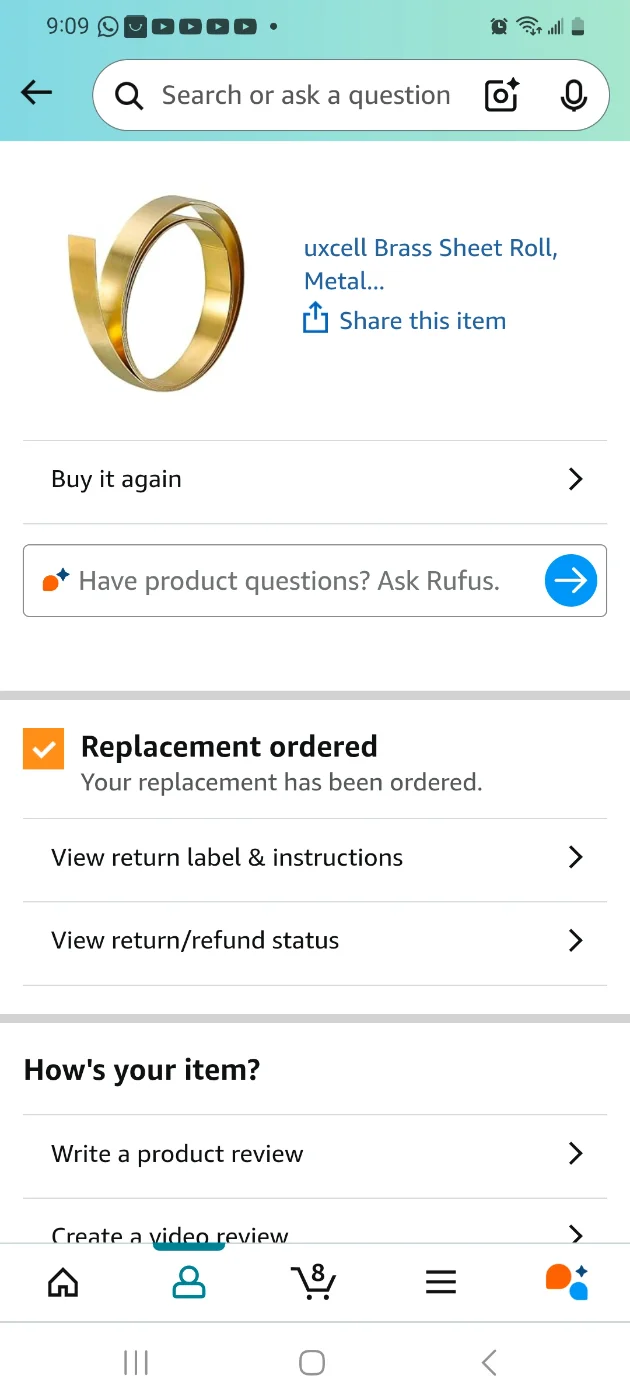
I was thinking a sleeve around the stub would work nice, I found a .1mm brass strip on amazon.
I'll test this see how it goes, I'll update.
https://a.co/d/81G4a3p
 
Well, I was hoping to try the brass strip today & this is what I got, I have 0 idea what this could b🤦
20250807_195414.webp


this is what I supposedly should've got
Screenshot_20250807_210918_Amazon Shopping.webp


Also ordered some covered nuts today just in case it worked but even if it doesn't I think I'd like them covered anyways


Screenshot_20250807_211125_Gmail.webp
 
Well, I was hoping to try the brass strip today & this is what I got, I have 0 idea what this could b🤦View attachment 10013

this is what I supposedly should've gotView attachment 10014

Also ordered some covered nuts today just in case it worked but even if it doesn't I think I'd like them covered anyways


View attachment 10015
Those are surface mount components probably resistors (they could be caps or diodes but 90% chance they are resistors). They come in a strip like that to feed a pick and place machine. The machine uses a robot arm to place each component on a PCB. The components are on big spools that are placed in the machine's feeder. First a stencil is used to apply solder paste to the lands for the components then the components are placed on the PCB and finally the whole thing is placed in an oven to melt the solder. The individual PCBs are all consolidated into one big sheet that gets made all at once and is then either cut apart into individual circuit boards with a CNC router or else the boards are precut with perfortated connecting tabs between them (called "mouse bites" in the industry) when the through holes are made before the copper plating was done and simply snapped apart when it's completed (mouse bites is the most common way it's done nowadays)

EDIT: They are called mouse bites because the edges of the tabs when snapped apart look like they have been chewed by a mouse. You can either clean them up or just leave them, usually they are just left if it doesn't affect fitment in the enclosure.
 
Last edited:
Well I got the shim strip finally & it is .1mm so atleast that's going as planned
20250809_133702.webp

What isn't going as planned is I got nervous last night & gave more throttle instead of brakes, bent the front of chassis , steering went way off & started hearing some strange gear noise(im hoping its just the diff bulkhead thats likely warped & maybe twisted a bit), I ordered the following & I'm hoping there isn't more damage
20250809_133004.webp
20250809_133111.webp
Screenshot_20250809_133229_AliExpress.webp
Screenshot_20250809_135102_Chrome.webp
 
I'm going to research a bit & see if It can b adapted 🤙
It uses the 4 screws that fix the skid plate to the front differential and chassis plate so the screws holes should at least be in the same place. There is one slight difference vs the pictures they show, they eliminated the red washers and replaced the seats with countersunk holes in the nylon part that the M4 countersink screws directly install in. I think this was to increase the strength of the screw holes by increasing the amount of materiel around the screw head.
 
Back
Top