I believe there is a right and a wrong way to do this.
Setting the ride height is personal preference, set by the preload collar on the shock, depending on the surface you choose to run - but droop isn't the ride height.
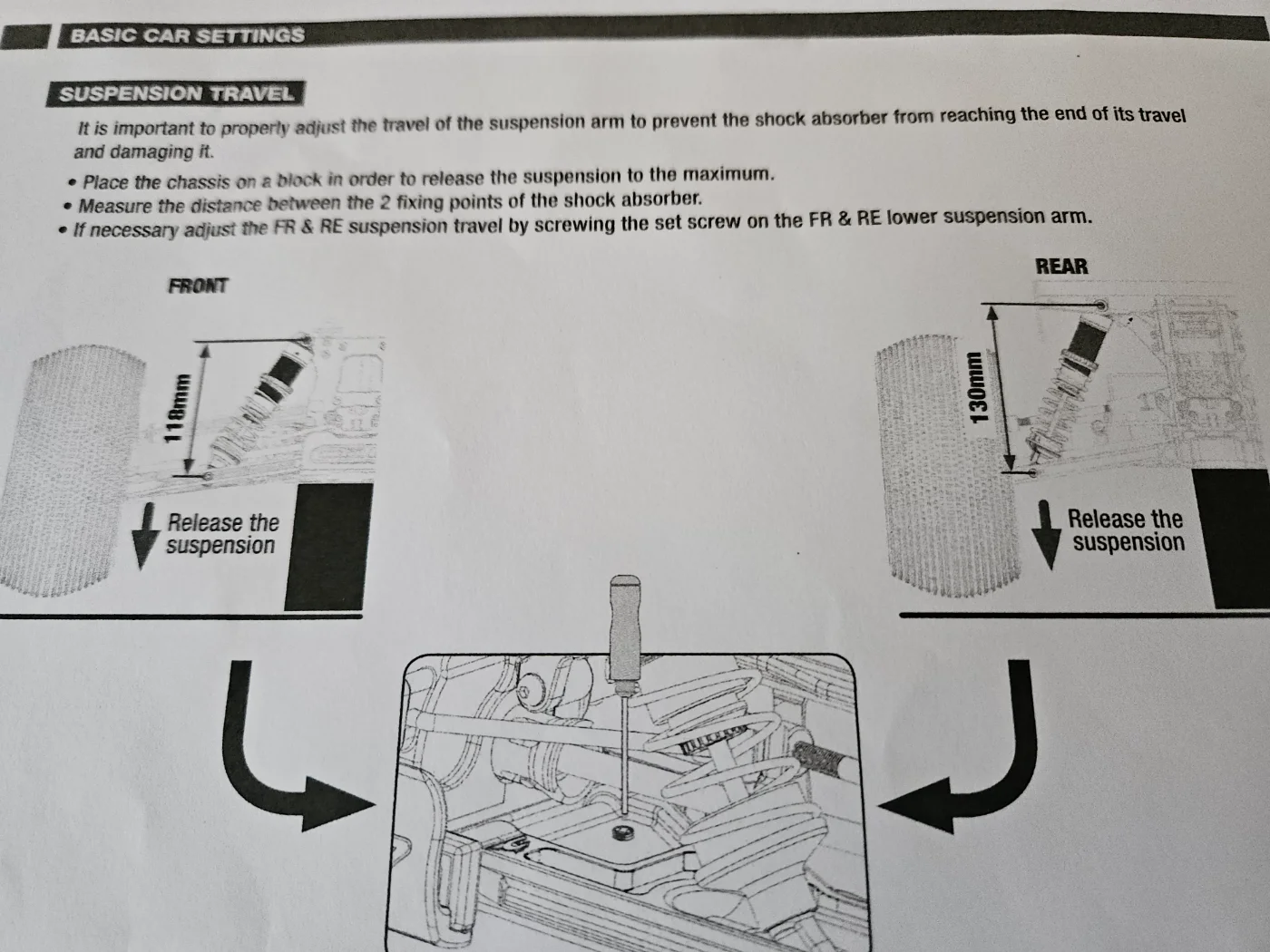
Setting the 'droop' or maximum 'suspension drop' should/must be done using the grub screws in the lower arms. Screwing them in deeper to the arm reduces droop, screwing them out increases droop. The maximum droop you can safely use should be less than the maximum extension of your shock absorber's shock shaft - otherwise it's effectively your shock piston acting as the limiter and you'll break your pistons and bend your shock shafts. This is 100% avoidable by ensuring the droop limit is set by the droop screws before the shock reaches it's maximum extension.
You can measure your shock lengths using calipers, whilst you're at it you can also ensure that your shocks are set to the same length.
Using the droop screws, you can ensure the shocks don't reach maximum extension. More or less droop can also tune the handling of your car.
Courtesy of
So Dialed:
Front droop
Less front droop
- Less weight transfer to the rear during acceleration
- Less on-power steering
- More high-speed steering stability
More front droop
- More weight transfer to the rear during acceleration
- More on-power steering
- Less high-speed steering stability
Rear droop
Less rear droop
- Less weight transfer to front during braking
- Less stability over bumps
- More stability under braking
More rear droop
- More weight transfer to front during braking
- Better handling over bumps
- Less stability under braking




 .
.


