

Horatio
Well-known member
- Messages
- 2,664
- Reaction score
- 3,535
- Points
- 458
So whilst the members on this board generally put together terrain conquering monsters - huge HP, giant motors, 4WD, ££$$ upgrades - how do you do more for less? 
What about when the weather is so cold, wet and generally unpleasant - RC is no longer nice outside?
Reluctantly, for those of us in Northerly latitudes - we move indoors for winter. No more large scale or 1/8th til spring.
So what makes for a perfect indoor machine, to help hone your reflexes and memory muscle?
1/12th Scale.
Specifically - Mini Class.
Here in the UK, there seems to be a huge upturn in Mini racing in accordance with Mini Masters rules. Popularity has grown since 2S Brushless class has been introduced. No specialised electronics required. Justock or Surpass motors will do just fine.
Mechanically, these are kept ultra simple. Simple also means reliable, durable and light.
This combination also makes a ridiculously high performance for a very modest outlay.
Let's take a look....
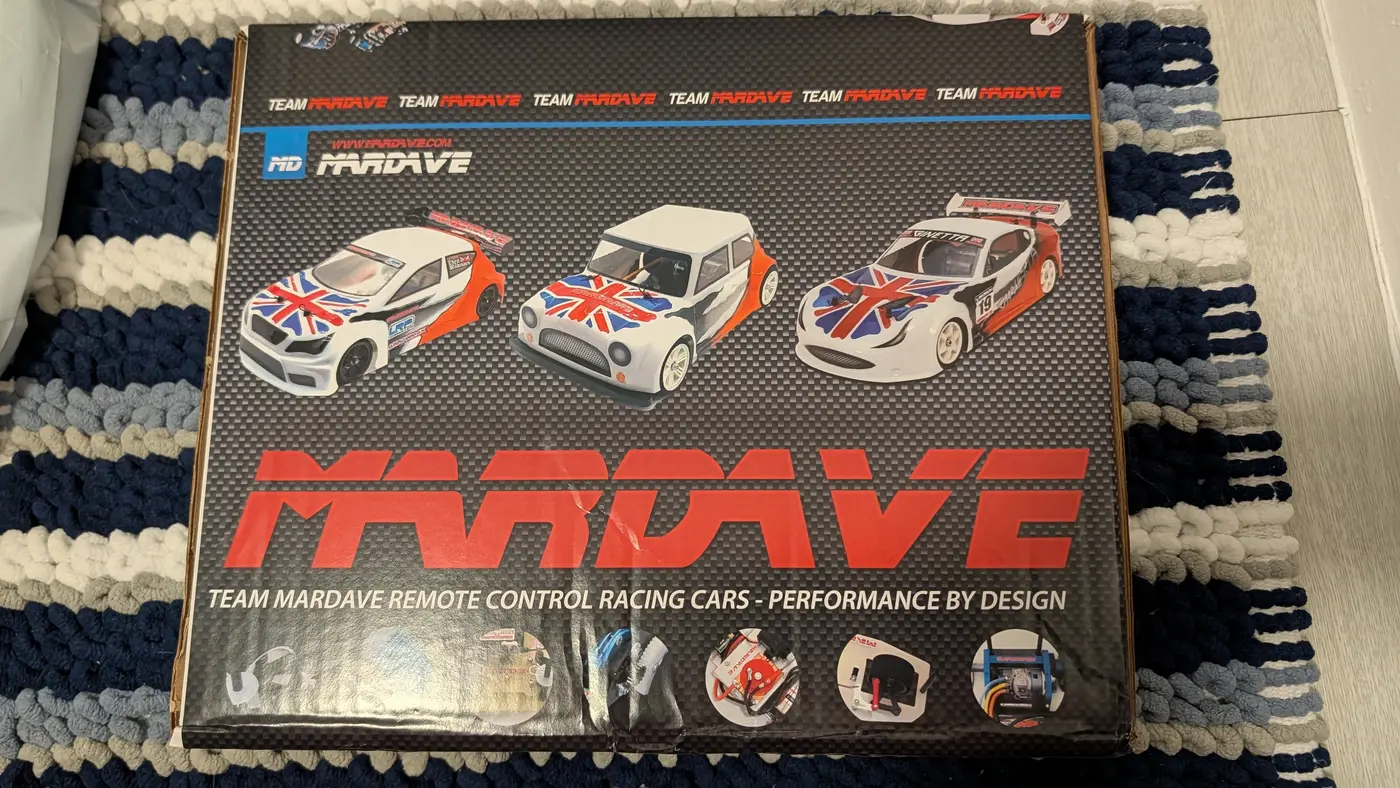
Chris Wilkinson is the owner of Mardave, the company that produced the first hobby grade RC car in the UK in the 60's.
Chris Wilkinson kindly sent me this assembled MD24 Carbon 'Mike Chapman' edition car.
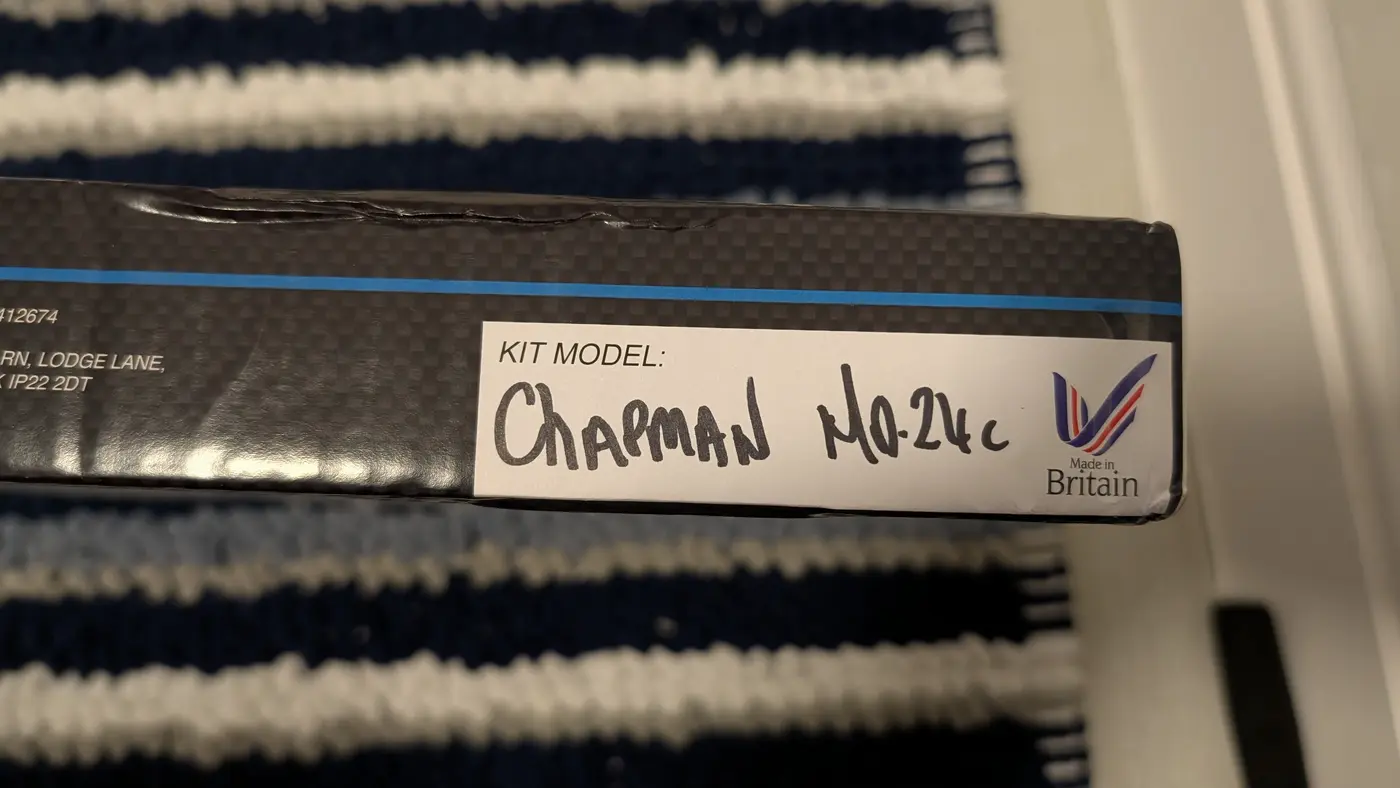
Each car has a personal touch about it
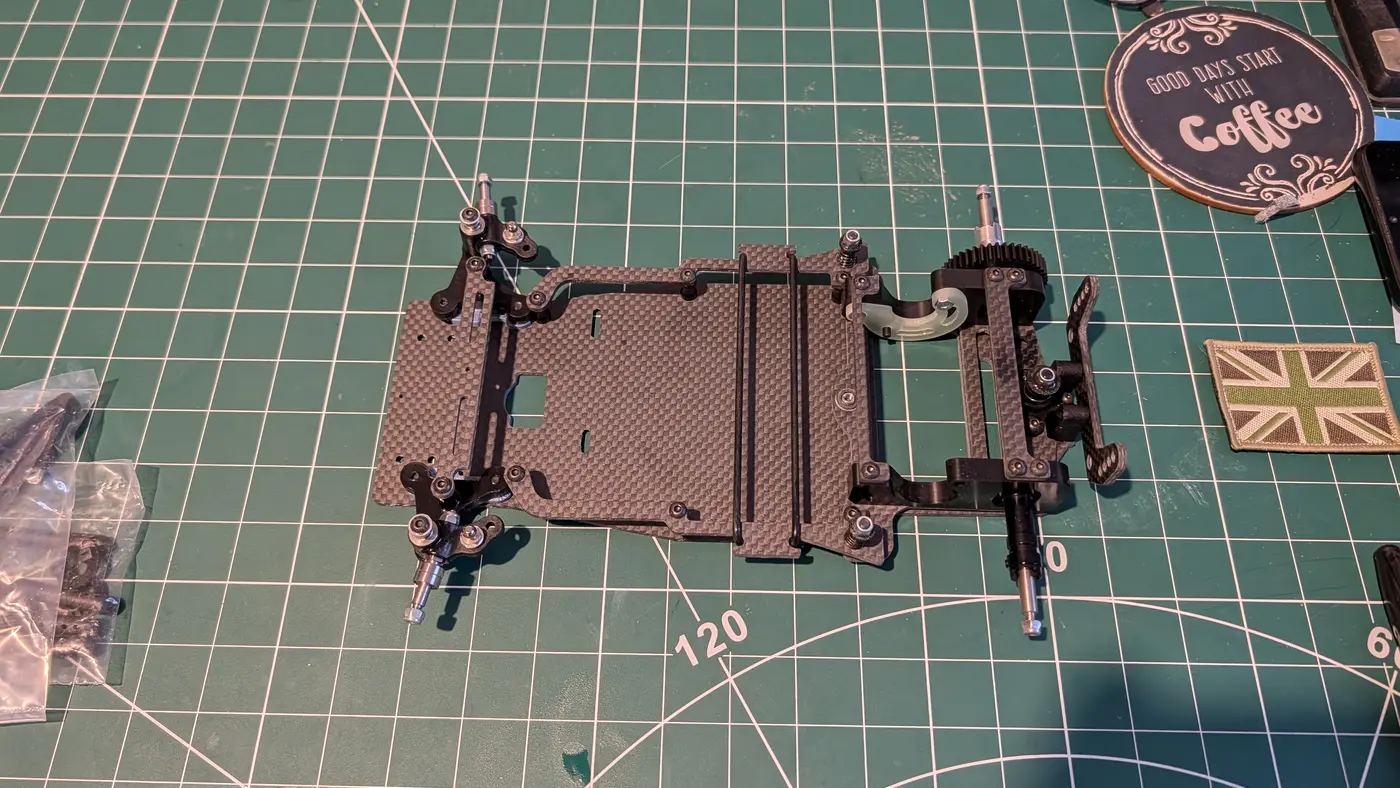
Here's the bare bones:
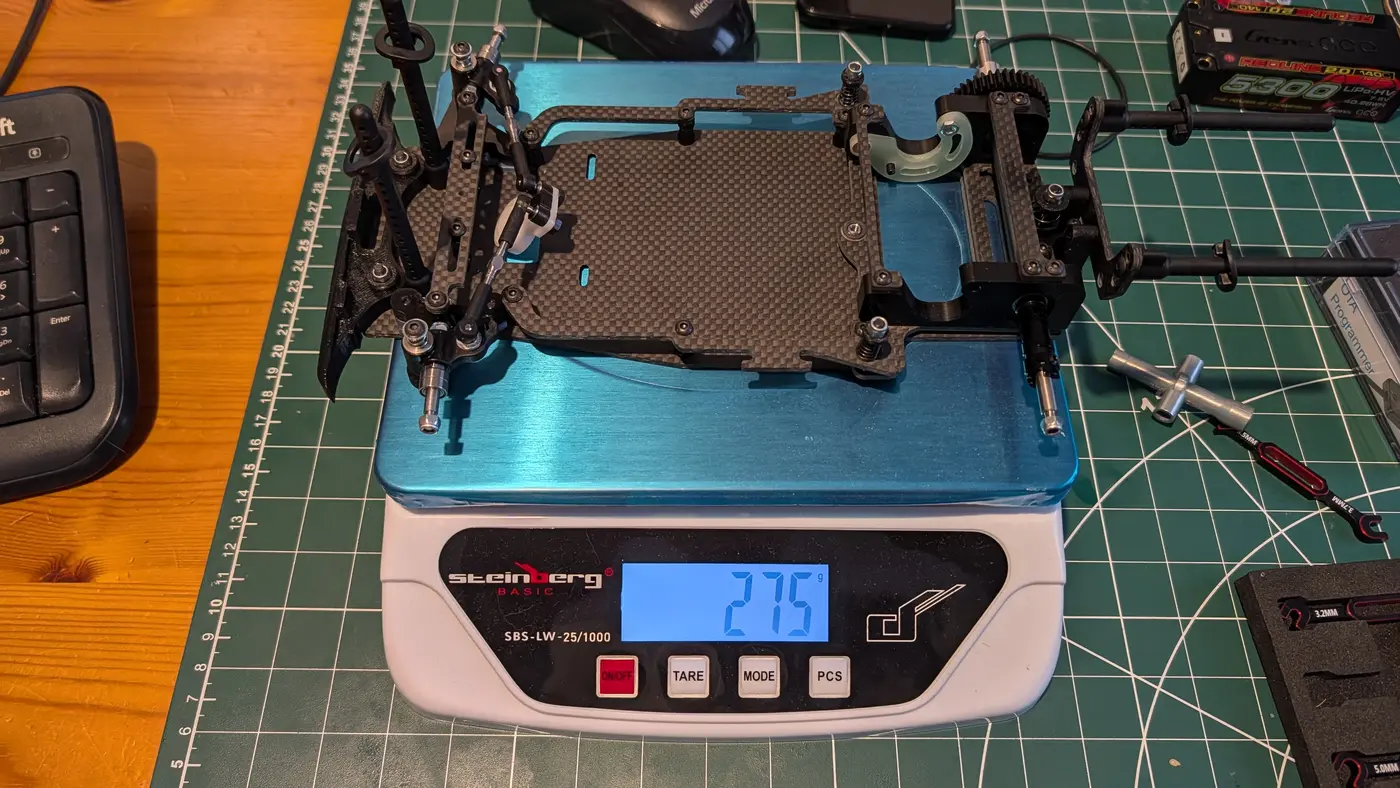
As I put mine together, it became readily apparent that this was going to be the lightest car I've ever had!
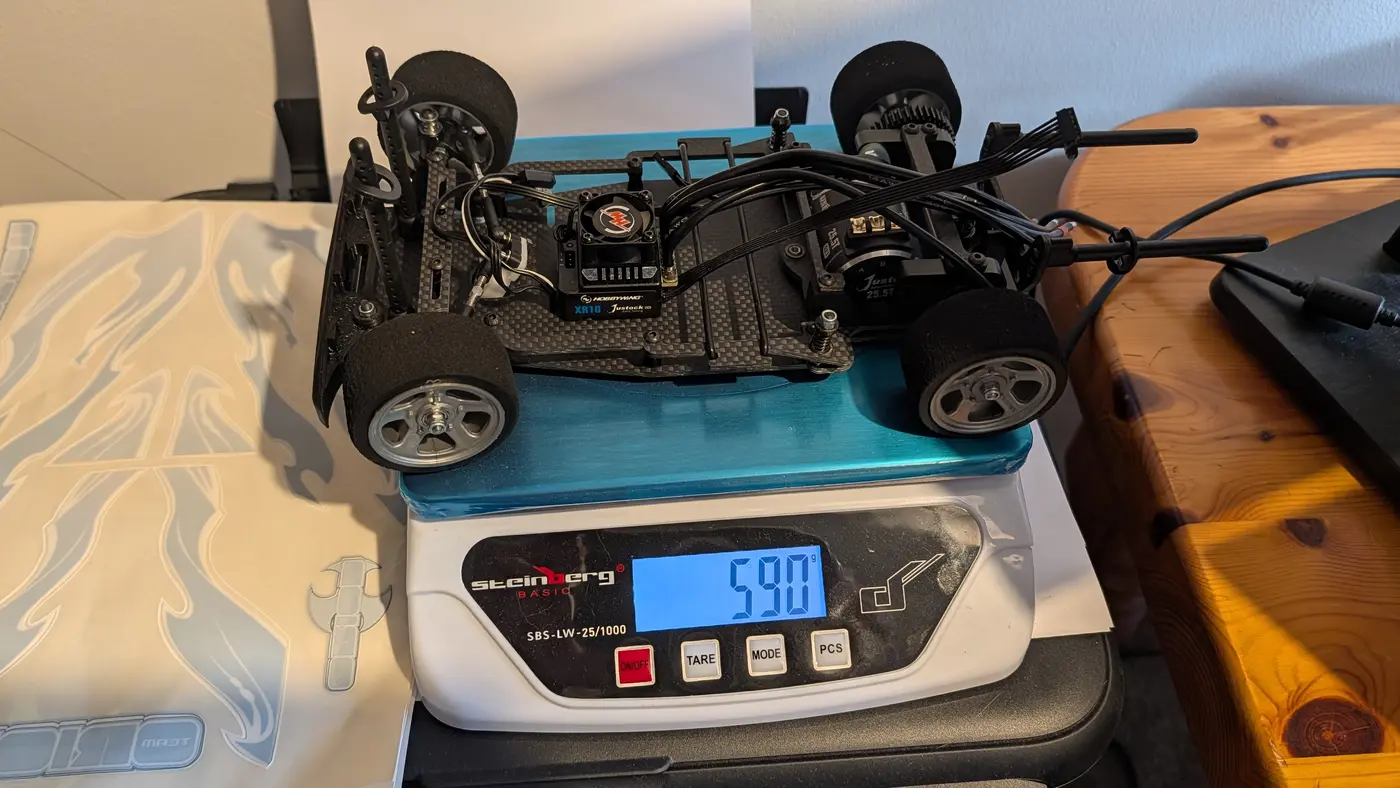
Justock with 25.5t motor - surely this will be a sleepy set-up, right? As a point of reference, one of my Baja 5B street tyres weighs more than this.
The servo selected was the AGF-RC B25CLS. This is a mini servo (not micro servo) and has 6kg of torque and transit speed of 0.06s/60°. Perfect for racing!
The mini servo is compact enough to mount over the front axle. This frees up space for ESC and receiver mounting on the chassis plate - rather than having to mount stuff on top of each other like the earlier cars.
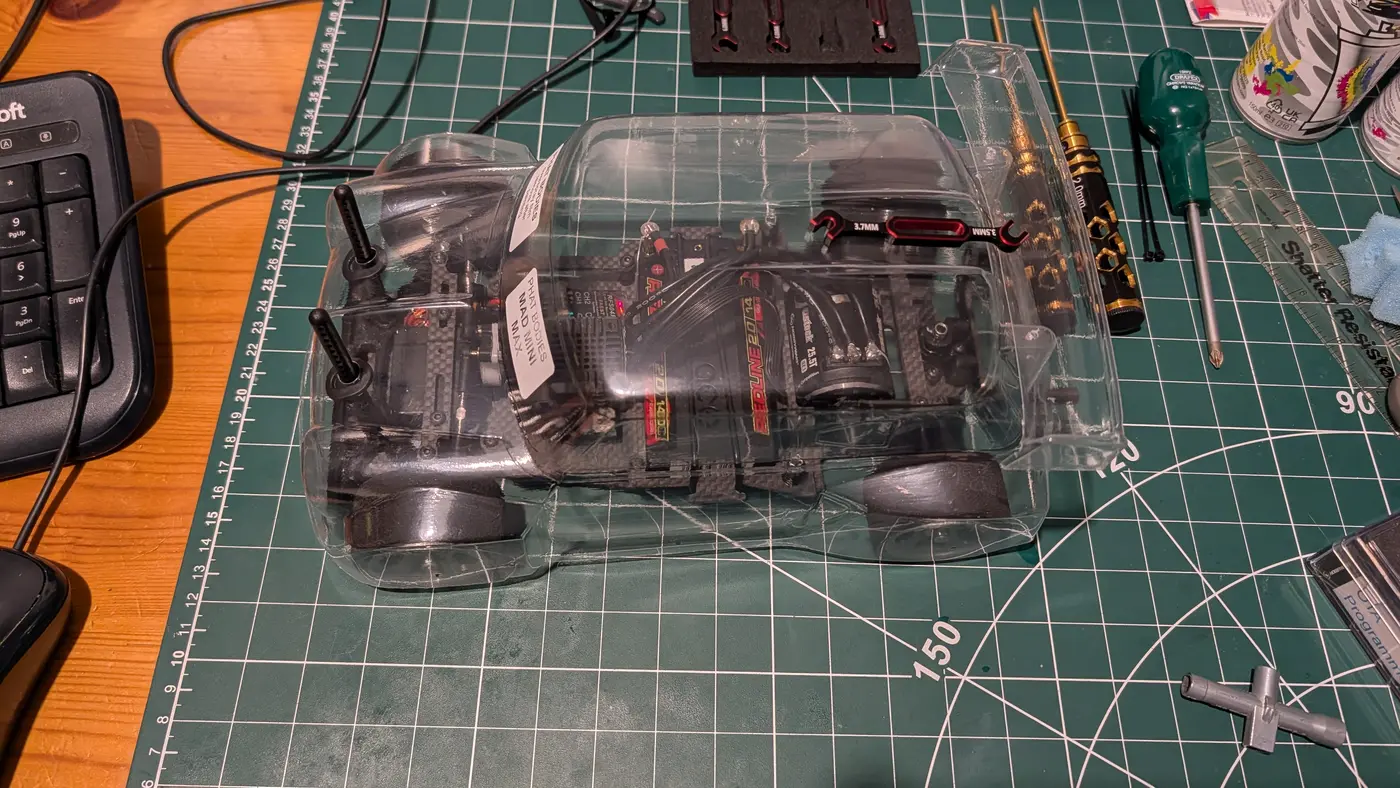
Phat Mini Max body was selected and supplied by Chris from Mardave. These little cars are sensitive to setup so the devil is definitely in the detail.
Mounting the body has to be done carefully to ensure a perfect fit.
Wheels and tyres from Contact or Kamtec are supplied trued, but I found the Kamtec foams were too big to be useable - they would require truing down by about another 4mm.
Contact 35 shore T foam rears and 40 shore fronts were fitted and were just the ticket.
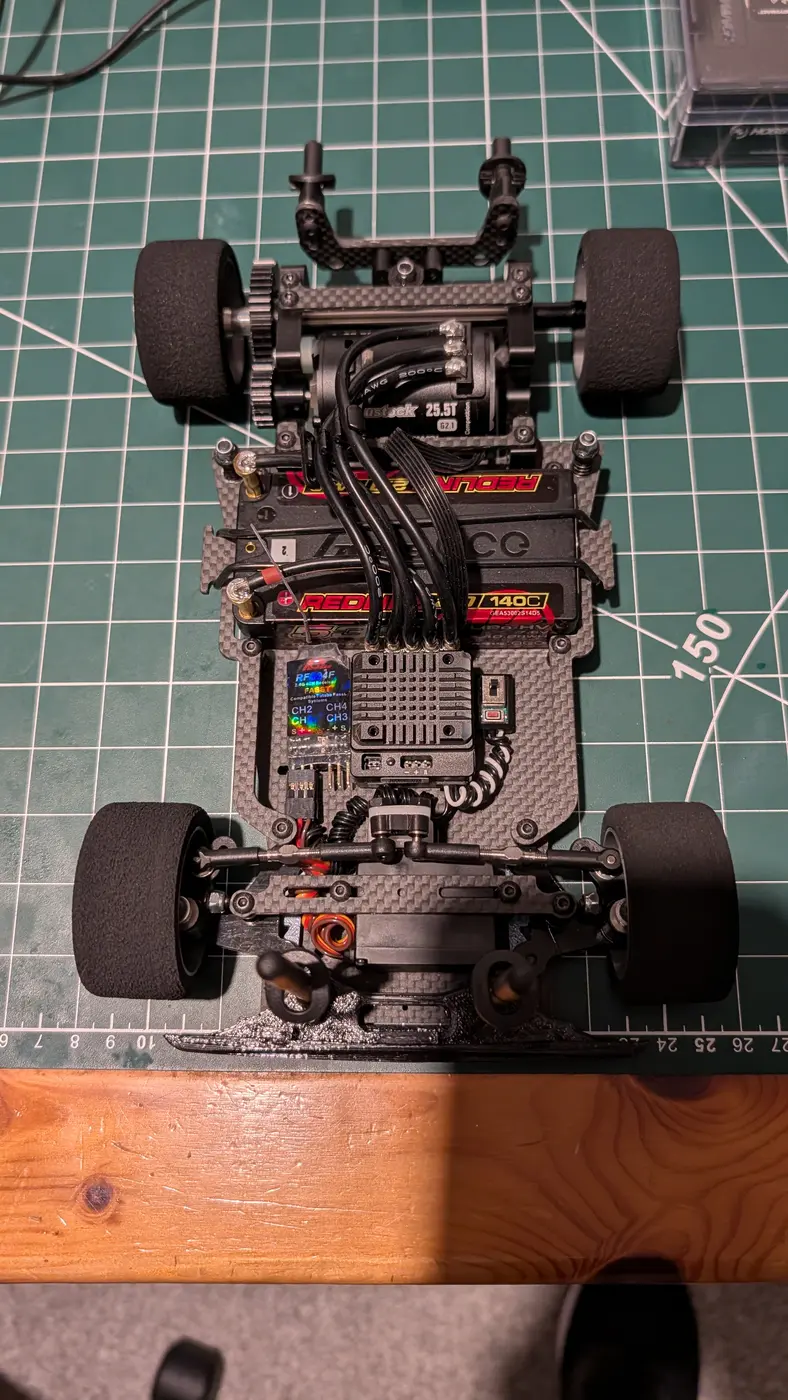
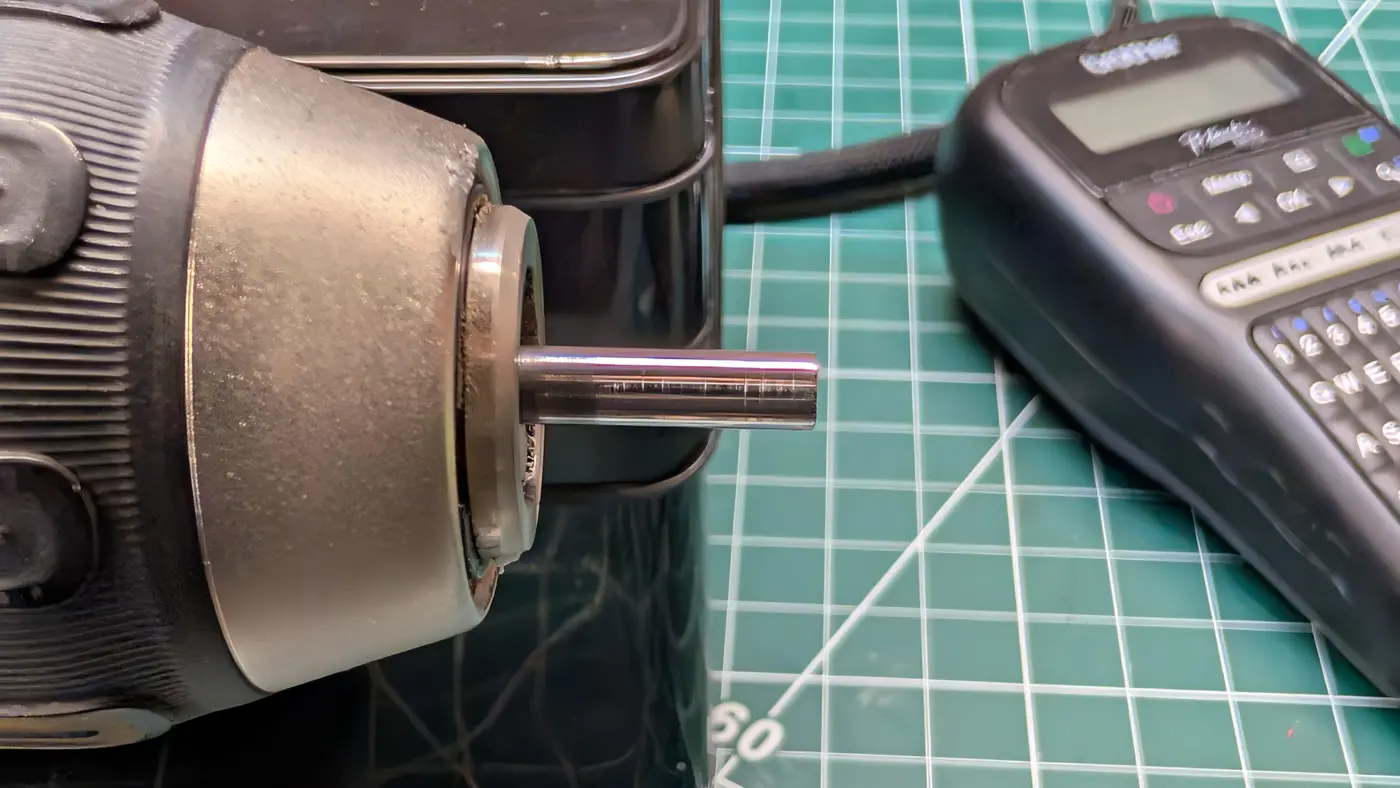
Things are fitting in nicely. Some little things now still to do. Kingpins next...along with a kingpin brace.
Kingpins benefit from being polished up. So I spun mine in a drill, used 1200 then 2000 grit paper and got them smooth - then polished them with a Dremel. Better!
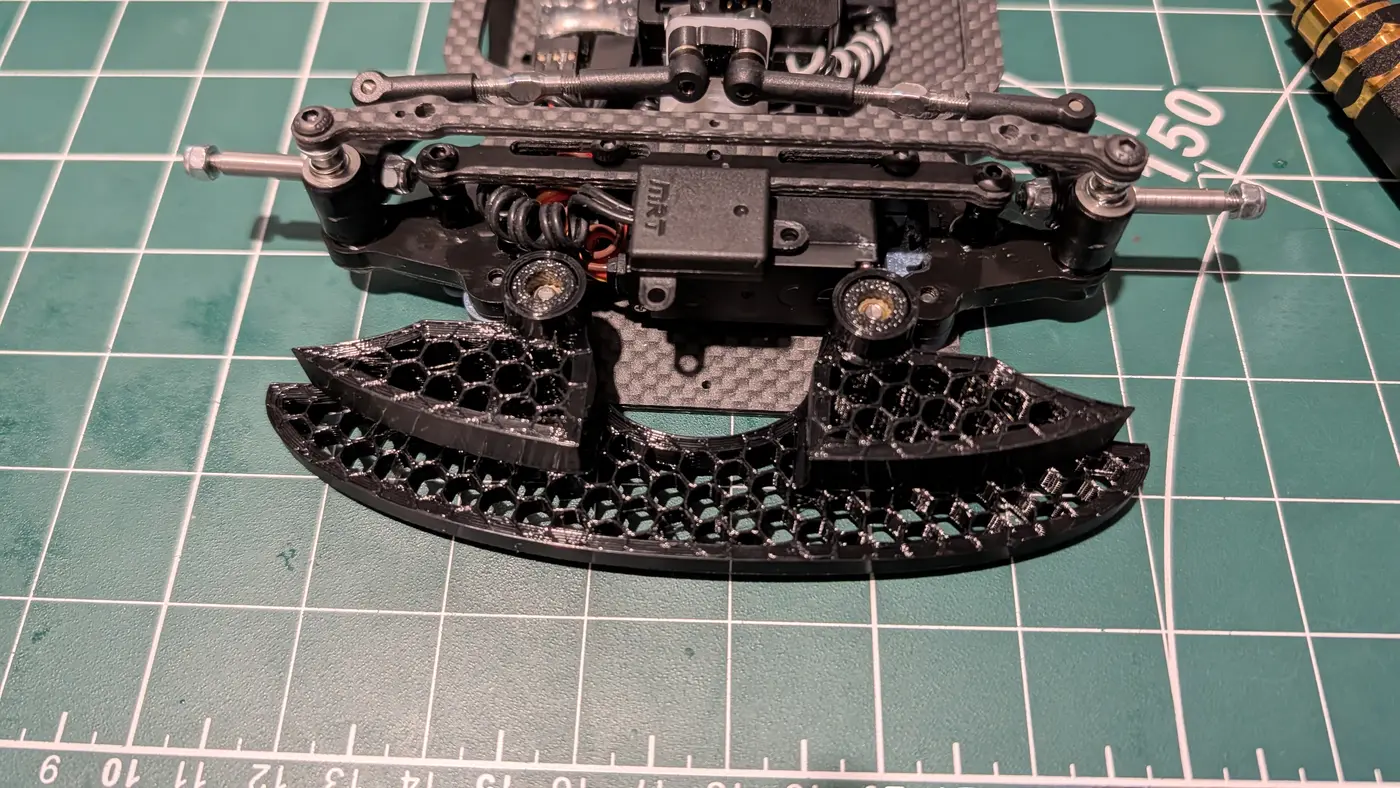
Transponder fitted and a revised 3D printed TPU front bumper. It's an additional 9g, but it fits the Phat Mini Max perfectly and helps prevent damage to your body.
You'll note the pin brace is now fitted. This I felt was a necessary addition because racing minis gets physical!
The beautiful Carbon chassis is CSC, essentially glass fibre sandwiched between to carbon sheets. The resulting glass, carbon, epoxy composite is lighter and stiffer than GRP. Minis made from GRP are made from 3mm plates. The one you see here is a mere 2.5mm and is purportedly 30% lighter.
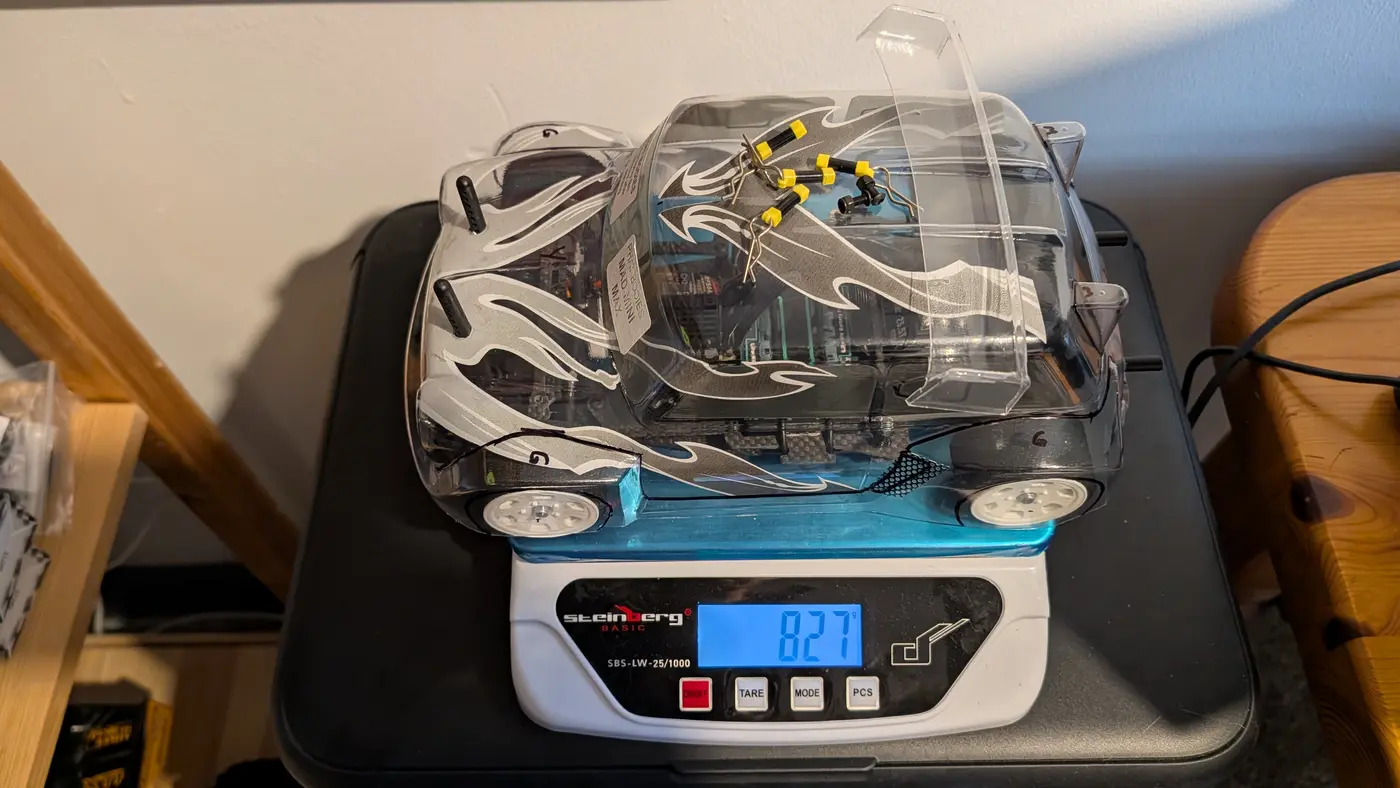
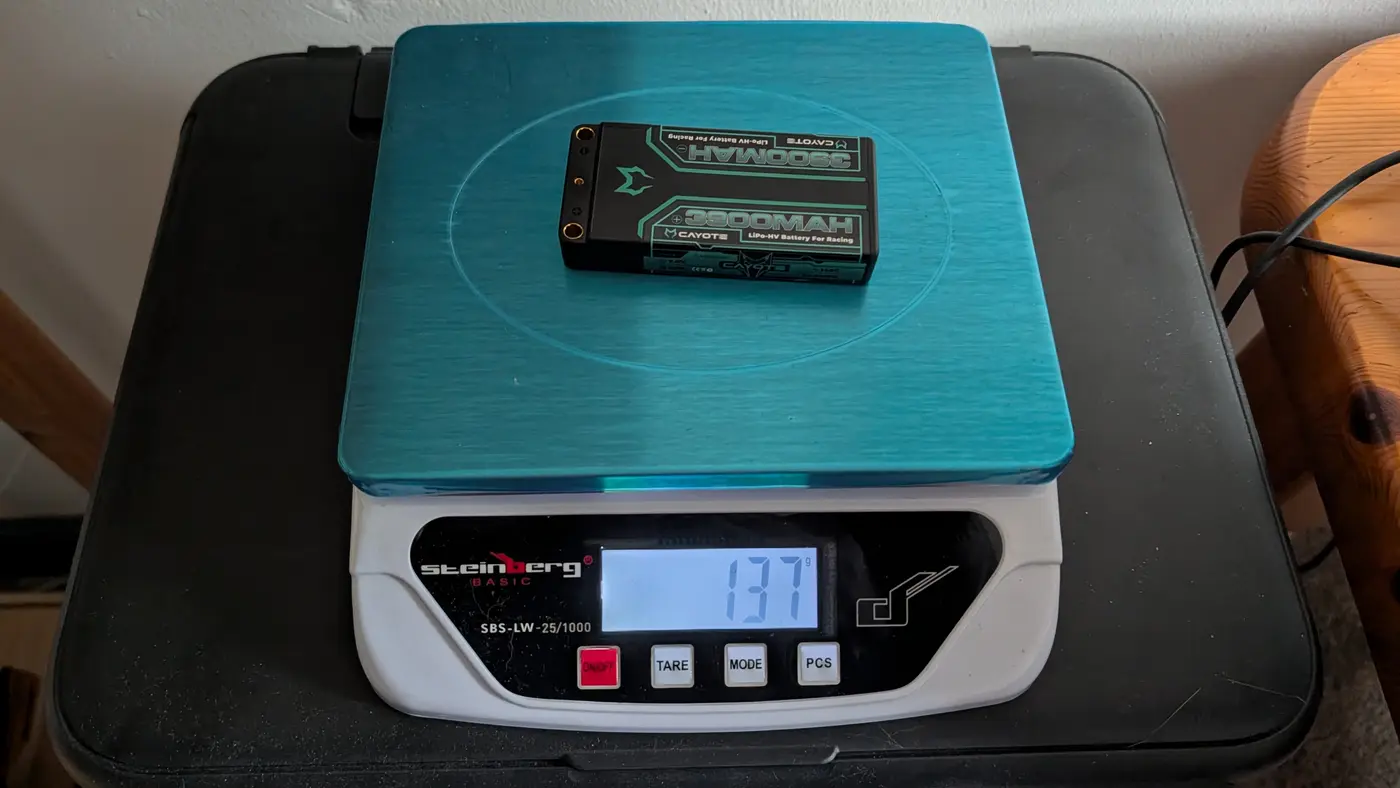
After carefully masking the body, it was time to lay some paint. I had planned on using a pro painter to do 3 bodies for me - but mid March was the earliest they could do. Cayote 3900 battery is super low and super light weight. Perfect for Mini.
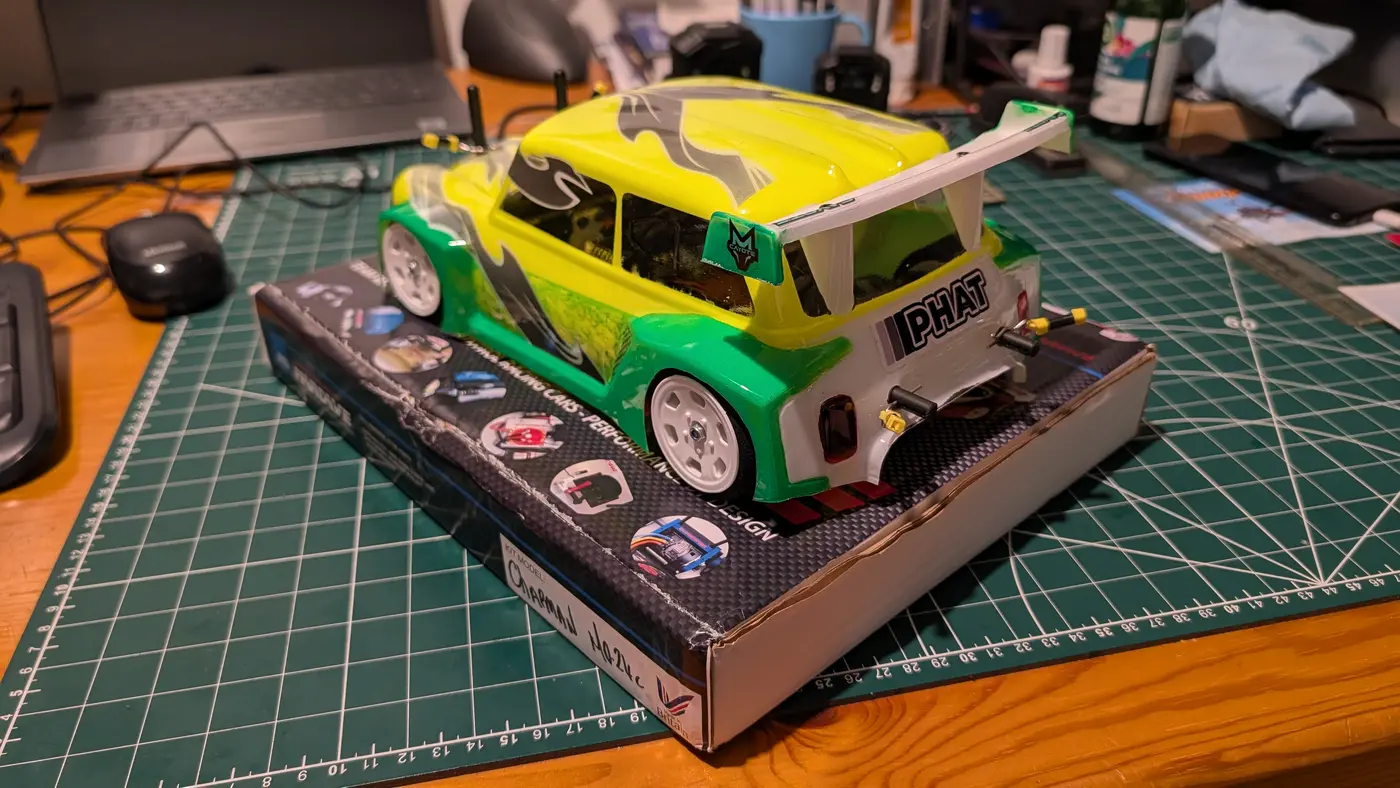
And there we have it...
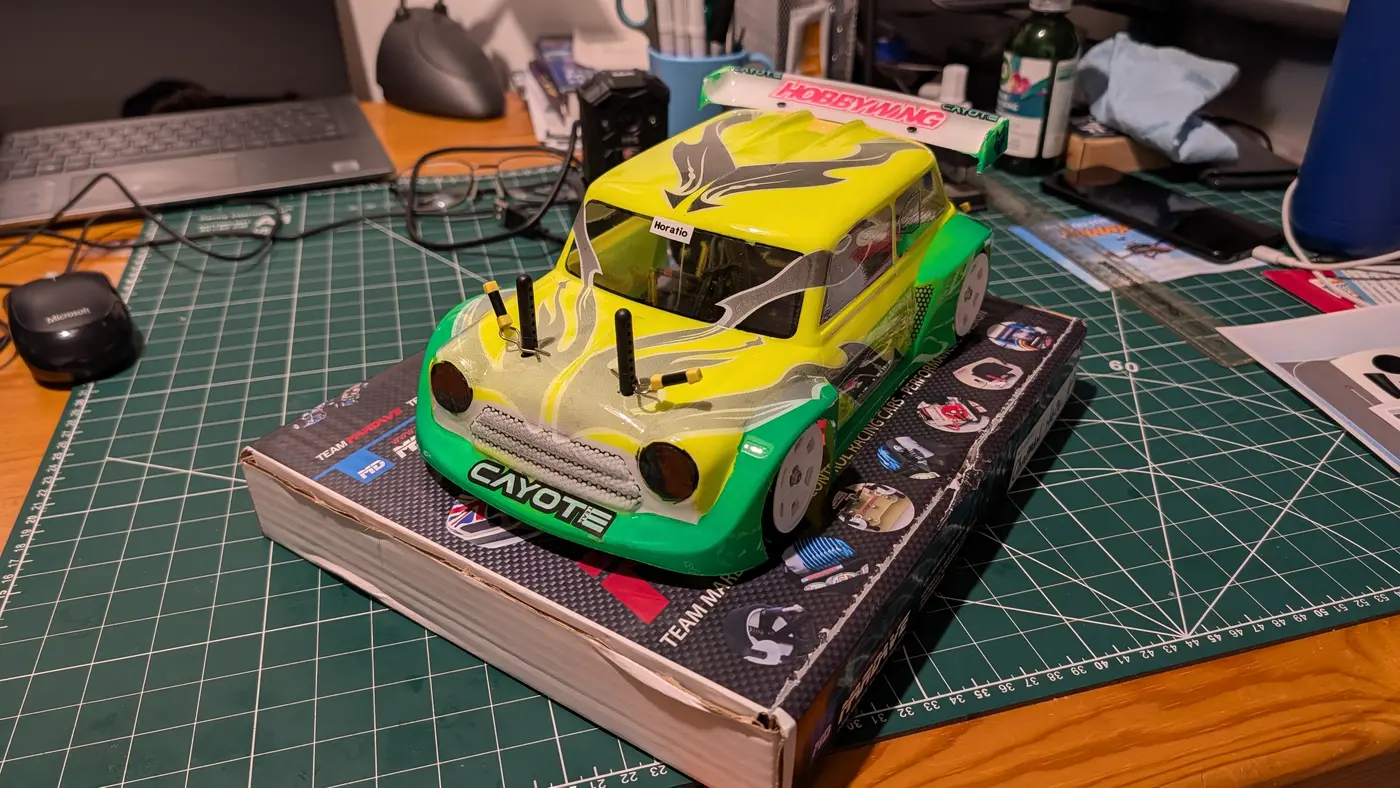
We are cooking on Gas...
All up weight: 825grans including transponder.
How does it drive? Up next ...
What about when the weather is so cold, wet and generally unpleasant - RC is no longer nice outside?
Reluctantly, for those of us in Northerly latitudes - we move indoors for winter. No more large scale or 1/8th til spring.
So what makes for a perfect indoor machine, to help hone your reflexes and memory muscle?
1/12th Scale.
Specifically - Mini Class.
Here in the UK, there seems to be a huge upturn in Mini racing in accordance with Mini Masters rules. Popularity has grown since 2S Brushless class has been introduced. No specialised electronics required. Justock or Surpass motors will do just fine.
Mechanically, these are kept ultra simple. Simple also means reliable, durable and light.
This combination also makes a ridiculously high performance for a very modest outlay.
Let's take a look....
Chris Wilkinson is the owner of Mardave, the company that produced the first hobby grade RC car in the UK in the 60's.
Chris Wilkinson kindly sent me this assembled MD24 Carbon 'Mike Chapman' edition car.
Each car has a personal touch about it
Here's the bare bones:
- Chassis plate
- Battery retainers
- Rear pod
- Side springs
- Front bumper
- Body posts
- Wheels and tyres
- Servo
- ESC
- Motor
- Battery
- Receiver
- Body
- Paint
As I put mine together, it became readily apparent that this was going to be the lightest car I've ever had!
Justock with 25.5t motor - surely this will be a sleepy set-up, right? As a point of reference, one of my Baja 5B street tyres weighs more than this.
The servo selected was the AGF-RC B25CLS. This is a mini servo (not micro servo) and has 6kg of torque and transit speed of 0.06s/60°. Perfect for racing!
The mini servo is compact enough to mount over the front axle. This frees up space for ESC and receiver mounting on the chassis plate - rather than having to mount stuff on top of each other like the earlier cars.
Phat Mini Max body was selected and supplied by Chris from Mardave. These little cars are sensitive to setup so the devil is definitely in the detail.
Mounting the body has to be done carefully to ensure a perfect fit.
Wheels and tyres from Contact or Kamtec are supplied trued, but I found the Kamtec foams were too big to be useable - they would require truing down by about another 4mm.
Contact 35 shore T foam rears and 40 shore fronts were fitted and were just the ticket.
Things are fitting in nicely. Some little things now still to do. Kingpins next...along with a kingpin brace.
Kingpins benefit from being polished up. So I spun mine in a drill, used 1200 then 2000 grit paper and got them smooth - then polished them with a Dremel. Better!
Transponder fitted and a revised 3D printed TPU front bumper. It's an additional 9g, but it fits the Phat Mini Max perfectly and helps prevent damage to your body.
You'll note the pin brace is now fitted. This I felt was a necessary addition because racing minis gets physical!
The beautiful Carbon chassis is CSC, essentially glass fibre sandwiched between to carbon sheets. The resulting glass, carbon, epoxy composite is lighter and stiffer than GRP. Minis made from GRP are made from 3mm plates. The one you see here is a mere 2.5mm and is purportedly 30% lighter.
After carefully masking the body, it was time to lay some paint. I had planned on using a pro painter to do 3 bodies for me - but mid March was the earliest they could do. Cayote 3900 battery is super low and super light weight. Perfect for Mini.
And there we have it...
We are cooking on Gas...
All up weight: 825grans including transponder.
How does it drive? Up next ...
Last edited:

 , I had a Mardave marauder back in the 90s was fun to build and spent more time trying to get it run than driving it but still found memories
  . I got a capri shell for it and still have the scar on the inside of my finger were the stanley knife chopped into my finger while cutting out the arches.


