Asuga Asuga steering linkage questions

This site may earn a commission from merchant affiliate
links, including eBay, Amazon, and others.

Atomic Skull

Well-known member
Messages
783
Reaction score
748
Points
248
So there is slop in the steering ball links particularly in the ball linkage on the servo arm (specifically the ball and link on the arm itself). It's not a huge amount but coming from RC helicopters *any* slop was unacceptable, balls would be a little tight and we resize them ball link reamer if they are too tight. Is this not the case with RC cars? This is my first big RC car so I wouldn't know. (I already have some surface experience with a 1:16 and I know enough to be cautious with large R/C vehicles having flown 12S R/C helicopters)

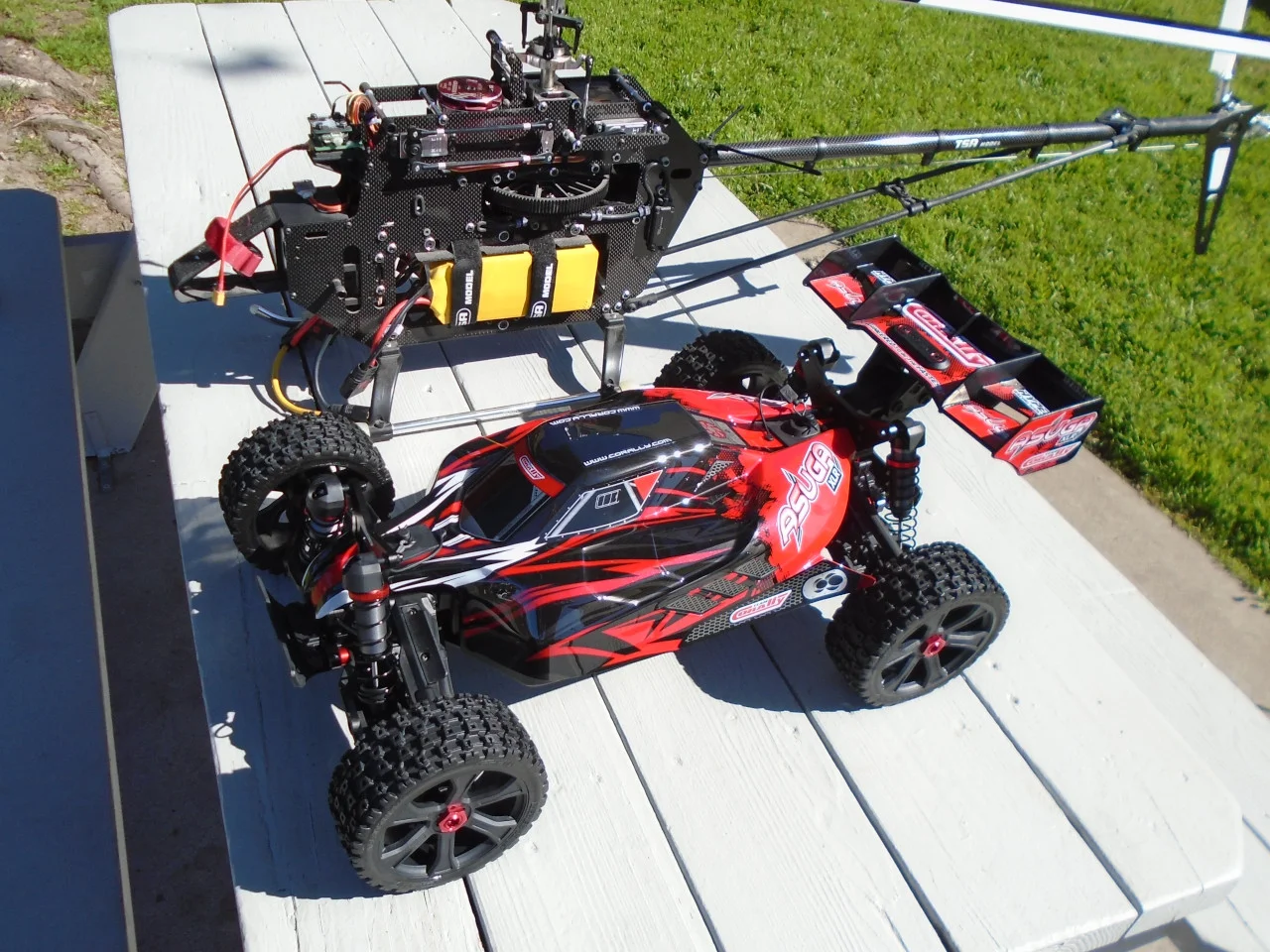
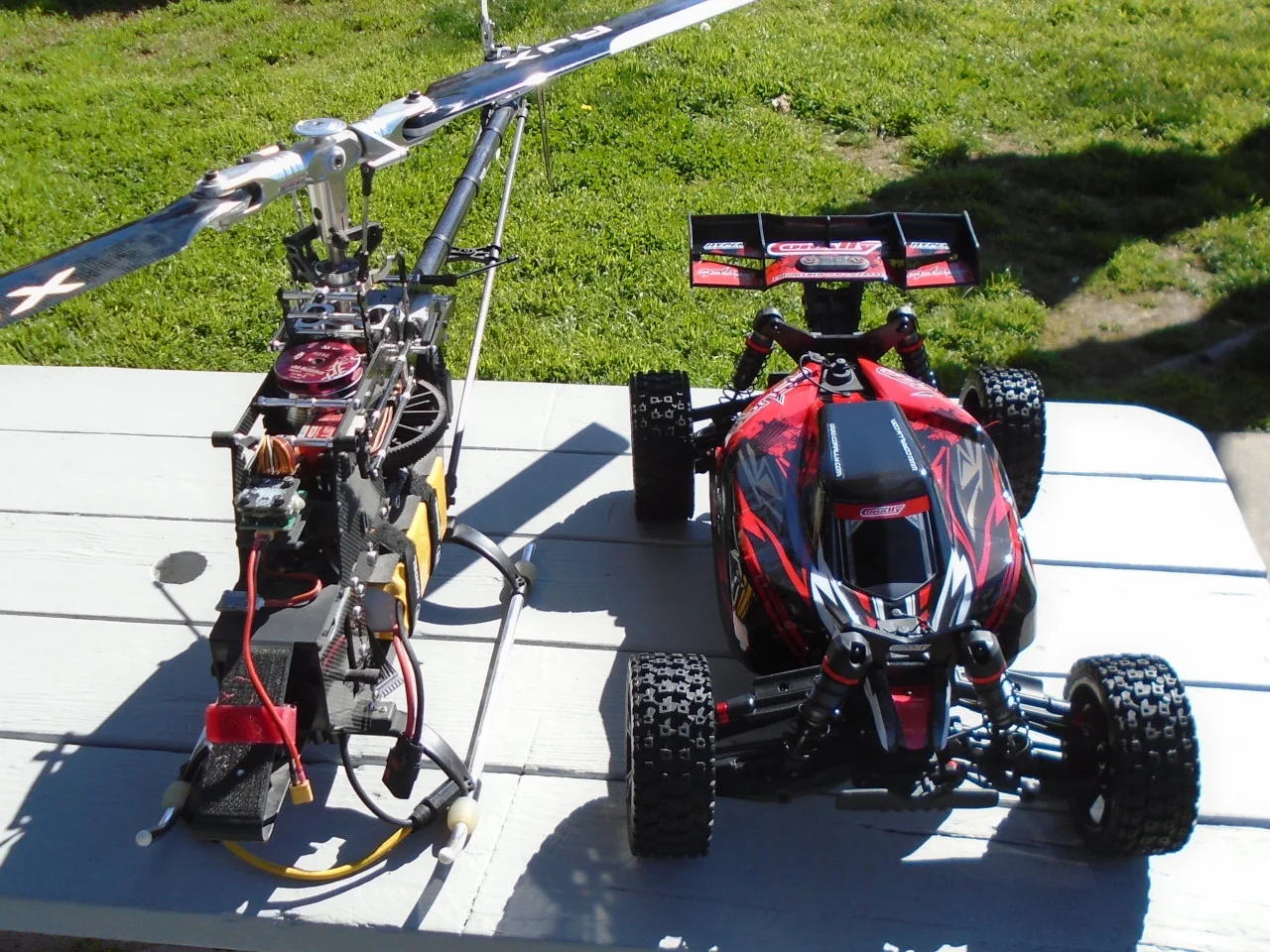
(pic attached of asuga next to one of my big helis)
asuga_vs_TSA700_003.webp


asuga_vs_TSA700_001.webp
 
Cars tend to be more tolerant of 'slop' in the joints, but it has to be within reason.

Suspension parts need to fall under their own weight and should not be sticky.

On steering linkages though, I would wonder how much play you are describing. Ideally, very little play - otherwise your steering cannot centre accurately and this will make driving the car significantly more challenging.
 
Could you make a short video of what you mean? I have a feeling i'm likely to agree that play/slop is a little alarming (considering the price) at times. Would be nice if some aviation standards were applied to cars. Does the play get worse near the limits of the steering at all?
 
It's not huge but again coming from RC helis any slop at all was unacceptable so that's the standard I'm used to. With helis they err toward "too tight" and expect you to ream the link if that's the case. It's less than 0.1mm of slop would be hard to show on a video you can feel it when you wiggle the servo linkage it but it's not really visible. EDIT to be clear this is the ball on the servo arm, not the link ball on the other end on the steering mechanics. It looks like I could just use the same sort of ball on the servo arm too and idk why they used different balls on each end of the link.
 
Last edited:
Ah ok. I am curious, is there any "play" in the stearing in genral though?
Because Corally (like many others) favour pivot ball front suspension, a little play can develop at the balls, upper A arms, track rods and bell cranks.

At the pivot balls - these can be adjusted with the big set screws in the hubs.

Steering linkage from horn to steering bellcrank should be free of play. It's important to get this as precise and slop free as you can to avoid centering issues.

As things wear, some play will develop, but on off road cars, it shouldn't impact the feel of the car too much.

PXL_20240927_095202325.webp


The servo mounts themselves into a plastic radio box will have some flex to it. The less flex and play in the overall system, the more responsive the car will feel.

Obviously the servo spec, speed and torque come into the equation - along with the actual resolution and latency of your radio system. Below about 20ms, the lag in your radio should become less noticeable. I favoured Futaba 3VCS because using FASST, latency is claimed to be 5ms.

For FPV, latency is even more of a concern, both in terms of the control link, but especially the video link.

It's fun striving for perfection, but thankfully even when our rigs are less than perfect, in most cases we can adapt our inputs and subconsciously 'drive around' any inadequacies. The more flexible we are, the less it matters how much play there is in your rig. 😁👍
 
I solved the issue by replacing the plastic link on the servo side with one for a 700 size helicopter and a 5mm uniball from a heli swashplate. As the stock servo arm has no threads in the arm I had to use a generic 20mm aluminum arm I had laying around that has M3 threads to mount the ball.

link_solution.webp
 
I solved the issue by replacing the plastic link on the servo side with one for a 700 size helicopter and a 5mm uniball from a heli swashplate. As the stock servo arm has no threads in the arm I had to use a generic 20mm aluminum arm I had laying around that has M3 threads to mount the ball.

View attachment 8215
Nice! That's a solid set up.

Here's how I did mine:

1000030764.webp

Also using a 5mm ball and anti vibration washers. However, I prefer a uniball that is drilled all the way through - because then I can use a lock nut.

With a revised servo saver arrangement, this would really benefit from a push/pull setup. All lovingly CNC machined in 7075 of course! It just has to clear the ackerman plate.
 
I found these balls on Aliexpress that may be a slop free fit with the stock links they're cheap so I ordered a set to try out.

https://www.aliexpress.us/item/2255800934747262.html

The stock links needs somewhere between 5.84~5.88mm ball diameter for a slop free fit without excessive drag. I tried a 5.93mm ball I had laying around and it was a bit too tight while the stock balls are 5.78mm-ish.
 
Last edited:
I found these balls on Aliexpress that may be a slop free fit with the stock links they're cheap so I ordered a set to try out.

https://www.aliexpress.us/item/2255800934747262.html

The stock links needs somewhere between 5.84~5.88mm ball diameter for a slop free fit without excessive drag. I tried a 5.93mm ball I had laying around and it was a bit too tight while the stock balls are 5.78mm-ish.
Nice one - I would have got them, but I randomly found these on eBay for £2.75 including shipping.

1000030771.webp

Should be better. Button head, through the arm, through the ball, into the locknut. 👍
 
Those are 5mm so you will need 5mm ball links to go with them. One thing I have found is all "5mm" or in fact ball linkages of any size are rarely exactly the listed size. They are usually slightly smaller. On helis 5mm usually means 4.93mm~4.96mm except for KDS Model who use 4.98~5mm balls. If those turn out to be 4.93mm-ish but under 4.97mm then XL Power links for the Specter 700 will work well they are inexpensive and have thick plastic. Heli links typically have a small amount of drag to them by design as a slop free fitment is considered to be more important than a totally free moving link. If it's really tight the link will be reamed a little to free it up. The tolerances in the plastic links lean toward always having a slop free fit rather than always having a completely free moving link. Seems like cars lean the other way.
 
Would be nice if you could get rod ends that had a split and a grub screw or something, so you could adjust it to perfection.
 
Would be nice if you could get rod ends that had a split and a grub screw or something, so you could adjust it to perfection.
Years ago I saw ball links like that, they have a split at thee end and a cap head screw that is used to fine tune the fitment. Generally a ball reamer works well enough if the link is too tight, no way to fix it if it's the other way.

You can make a ball reamer for any size ball by cutting a slot in the side of an example of that ball with a dremel cutoff wheel and then screwing it to something to use as a handle. Pop it in twist it till there's only a slight amount of drag, pop it back out, done. The sharp edges of the slot will shave the inside of the ball link till it fits perfectly.
 
You can make a ball reamer for any size ball by cutting a slot in the side of an example of that ball with a dremel cutoff wheel and then screwing it to something to use as a handle. Pop it in twist it till there's only a slight amount of drag, pop it back out, done. The sharp edges of the slot will shave the inside of the ball link till it fits perfectly.
Clever, i like it!
 
Back
Top